

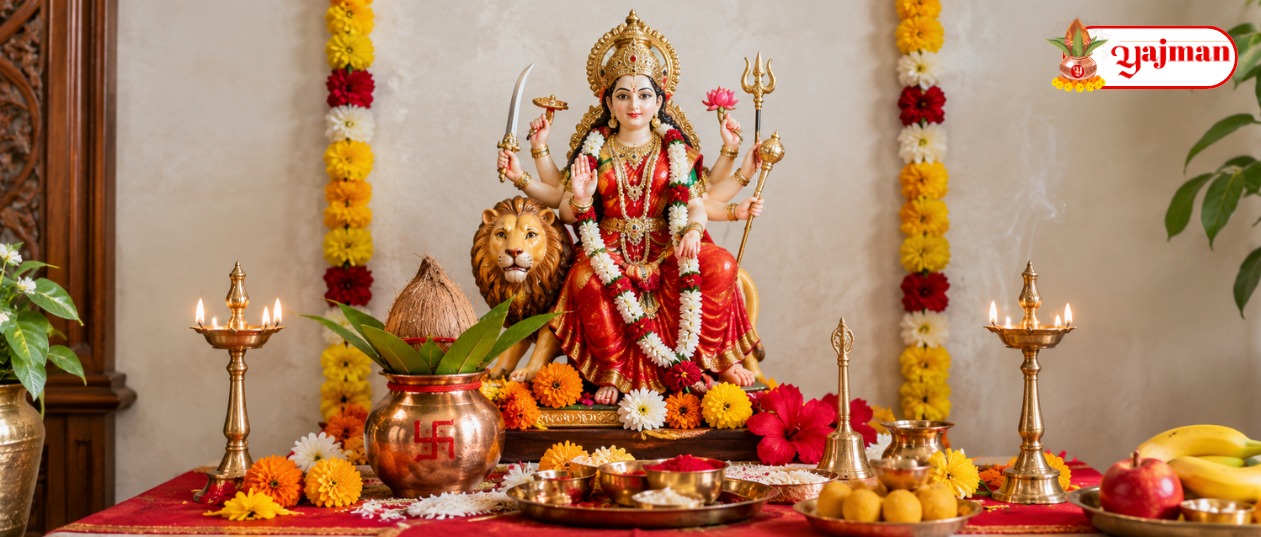
Navratri represents the sacred cosmic alignment where the primordial feminine energy—Adi Shakti—descends to restore dharma, dissolve internal negativity and bestow spiritual and material prosperity. Across the Indian subcontinent and global Hindu diaspora, Shardiya Navratri 2026 marks nine nights of devotion, scriptural recitation and ritual purification.
Navratri is not merely a seasonal festival; it is a profound sadhana. Rooted in Vedic and Puranic traditions—chiefly the Devi Bhagavata Purana and the Markandeya Purana (Devi Mahatmya)—these nine nights represent the conquest of the higher self over lower instinctual vices: ego (Ahankar), anger (Krodh) and attachment (Moh).
Shardiya Navratri 2026 Dates and Auspicious Calendar
Shardiya Navratri falls during the Hindu lunar month of Ashwin during Shukla Paksha , typically coinciding with September and October. Navratri 2026 October celebrations span from mid-October through the culmination of Vijayadashami (Dussehra).
Understanding the precise tithi transitions ensures that rituals such as Ghatasthapana, Maha Ashtami, and Maha Navami are conducted during their exact scriptural muhurats.
Navratri Day & Tithi
Form of Maa Durga
Date (Gregorian)
Significance & Spiritual Attributes
Day 1 (Pratipada)
Maa Shailputri
October 11, 2026
Embodiment of Mother Earth; grounding the Muladhara Chakra
Day 2 (Dwitiya)
Maa Brahmacharini
October 12, 2026
Penance, asceticism, self-discipline, and inner resolve
Day 3 (Tritiya)
Maa Chandraghanta
October 13, 2026
Courage, dispelling fear, awakening mental clarity
Day 4 (Chaturthi)
Maa Kushmanda
October 14, 2026
Cosmic creator; radiating vitality, health, and solar light
Day 5 (Panchami)
Maa Skandamata
October 15, 2026
Maternal grace, purification of intellect, and protection
Day 6 (Shashthi)
Maa Katyayani
October 16, 2026
Slaying of Mahishasura; victory over chronic obstacles
Day 7 (Saptami)
Maa Kaalratri
October 17, 2026
Annihilation of darkness, ignorance, and negative karmic cycles
Day 8 (Ashtami)
Maa Mahagauri
October 18, 2026
Ultimate purification, tranquility, and forgiveness
Day 9 (Navami)
Maa Siddhidatri
October 19, 2026
Giver of the 8 classical Siddhis, perfection, and spiritual liberation
Day 10 (Dashami)
Durga Visarjan / Dussehra
October 20, 2026
Triumph of virtue over vice; immersion of sacred Ghat
For families and working professionals seeking to ensure every ritual is aligned with authentic Vedic timings across different time zones, the Yajman App provides location-calibrated
Ghatasthapana 2026: Kalash Sthapana Muhurat & Sacred Rituals
The foundational ritual of Navratri is Ghatasthapana 2026 (or Kalash Sthapana). The Kalash serves as a cosmic micro-vessel housing the collective energies of the Holy Trinity (Brahma, Vishnu and Shiva) along with the Divine Mother herself.
Ghatasthapana Muhurat Parameters
According to the Dharmasindhu and Nirnayasindhu, Ghatasthapana must be carried out during the first third of the Pratipada tithi or during the universally auspicious Abhijit Muhurat. Performing Kalash Sthapana during Chitra Nakshatra, Vaidhriti Yoga, or afternoon/night hours is strictly avoided in traditional shastras.
Primary Morning Muhurat: 06:21 AM – 10:14 AM (Ashwin Pratipada)
Abhijit Muhurat: 11:46 AM – 12:32 PM
Essential Navratri Puja Samagri List
Preparing an authentic Navratri Puja Samagri List in advance preserves the sanctity of the ritual space:
For Kalash & Bed of Sowing: Wide earthen pot, sacred clean soil/sand (Saptamrittika), unbroken barley grains (Jau), copper/brass Kalash, clean Gangajal, sacred water, betel nuts (Supari), raw turmeric root, cloves, cardamom, coins, 5 or 7 mango leaves (Amra Pallava), and an unpeeled coconut wrapped in red cloth with sacred thread (Kalava/Moli).
For Maa Durga Sthapana: Red altar cloth, wooden pedestal (Chowki), clay/brass idol or picture of Maa Durga, Chunri, Shringar kit (vermilion, alta, kajal, bindi, bangles, mehendi), and Akshata (unbroken rice washed and coated with turmeric).
For Daily Offerings & Aarti: Pure cow ghee, earthen or brass lamps (Diyas), pure cotton wicks, camphor (Kapur), dhoop, agarbatti, fresh seasonal flowers (especially red hibiscus and lotus), paan leaves, cloves, batasha, sweets, and panchamrit (milk, curd, honey, ghee, sugar).
Step-by-Step Navratri Puja Vidhi at Home
Whether performing Maa Durga Puja at home yourself or seeking guidance, adhering to the shastric sequence ensures optimal spiritual efficacy:
Atma Shuddhi & Sankalpa: Bathe early, wear clean, unstitched natural fabrics (avoiding dark colors like black). Sit facing East or North. Take water in your right palm with Akshata and a flower, reciting the formal Sankalpa Mantra declaring your name, gotra, place, and the intent of your nine-day vrat.
Preparing the Jau Bed: Spread the sacred soil in the shallow clay dish and sow the barley seeds evenly, sprinkling water gently.
Kalash Sthapana: Place the Kalash in the center of the earthen bed. Fill it with Gangajal and water. Drop in a coin, supari, haldi knot, and durva grass. Arrange the mango leaves in a circle along the rim. Vermilion swastikas on the outer surface of the Kalash. Place the prepared coconut securely over the leaves.
Avahana & Shodashopachara: Invoke Lord Ganesha first to eliminate obstacles. Then, invoke the presence of the Divine Mother into the Kalash and idol (Avahan). Offer Asan, Pady, Arghy, Snan, Vastr, Chandan, Kumkum, Pushp, Dhoop, Deep and Naivedya.
Durga Saptashati Path: Recite the sacred 700 verses from the Markandeya Purana, starting with the Kavacham, Argala Stotram, and Kilakam. If time is constrained, reciting the Siddha Kunjika Stotram alongside the Navarna Mantra
ॐ ऐं ह्रीं क्लीं चामुण्डायै विच्चे
delivers complete protective resonance.Aarti and Kshamaprarthana: Perform the daily Navratri Aarti
(Ambe Tu Hai Jagdambe Kali or Jai Ambe Gauri)
using burning camphor and a ghee lamp. Always conclude with the Kshama Prarthana to atone for any procedural flaws.
If mastering Sanskrit intonation or executing lengthy rituals feels overwhelming, the Yajman App bridges the gap. It connects devotees with certified, verified Vedic scholars for authentic Navratri Puja with Pandit Ji, whether arranged in person or executed via personalized Navratri Puja online setups.
The 9 Forms of Goddess Durga: Names, Iconography & Mantras
The Devi Kavacha explicitly delineates the sequence of the nine manifestations of Maa Durga, each addressing distinct realms of consciousness, karma, and worldly challenges.
1. Maa Shailputri (Day 1)
The daughter of the Himalaya mountains, representing the initial awakening of Kundalini energy at the Muladhara (root) chakra. She rides the bull Nandi, holding a trident (Trishula) and lotus.
Mantra: Om Devi Shailaputryai Namah
2. Maa Brahmacharini (Day 2)
The solitary ascetic walking barefoot, embodying penance, immense patience, and intellectual endurance. She holds a Japamala and water pot (Kamandalu), governing the Swadhisthana chakra.
Mantra: Om Devi Brahmacharinyai Namah
3. Maa Chandraghanta (Day 3)
Adorned with a bell-shaped crescent moon on her forehead, she rides a tiger, wielding ten weapons. She balances wrath against injustice with gentle protection for devotees, governing the Manipura chakra.
Mantra: Om Devi Chandraghantayai Namah
4. Maa Kushmanda (Day 4)
The silent cosmic architect whose gentle smile generated the egg of the universe (Brahmand). Sitting astride a lioness, she resides in the core of the Sun and oversees the Anahata (heart) chakra.
Mantra: Om Devi Kushmandayai Namah
5. Maa Skandamata (Day 5)
The mother of Lord Kartikeya (Skand), representing unconditional grace, intuitive wisdom, and maternal preservation. She rules the Vishuddha (throat) chakra, clearing communication blocks.
Mantra: Om Devi Skandamatayai Namah
6. Maa Katyayani (Day 6)
Born from the combined radiant wrath of Brahma, Vishnu, and Shiva to eliminate the demon Mahishasura. She commands fierce valor and rules the Ajna (third-eye) chakra.
Mantra: Om Devi Katyayanyai Namah
7. Maa Kaalratri (Day 7)
The most terrifying form of the Divine Mother—dark-complexioned with disheveled hair, breathing flames, wielding a cleaver and iron noose. She obliterates planetary afflictions, malevolent energies, and existential dread while assuring fearlessness (Abhay Mudra).
Mantra: Om Devi Kalaratryai Namah
8. Maa Mahagauri (Day 8)
Radiant, peaceful, and draped in pure white attire, representing absolute purity, inner rebirth, and forgiveness. Worshiping her dissolves past lifetimes of accumulated negative karma.
Mantra: Om Devi Mahagauryai Namah
9. Maa Siddhidatri (Day 9)
Seated on an expansive lotus blossom, she bestows the 18 classical mystic achievements and spiritual fulfillment (Siddhis). Even Lord Shiva achieved his Ardhanarishwar form by her boundless benevolence.
Mantra: Om Devi Siddhidatryai Namah
Navratri Vrat Vidhi & Scriptural Rules
Fasting during Navratri is an ancient, deliberate synchronization of human bio-rhythms with planetary transitions. As the seasons shift (Ritu Parivartan), digestive fire (Jatharagni) naturally recalibrates. Observing fasting rules restores physiological equilibrium while fostering meditative poise.
Fasting can be observed in three primary modes depending on health and capacity:
Nirahar: Fasting purely on water or light fluids (herbal infusions, coconut water).
Phalahar: Consuming fresh fruits, raw milk, unheated nuts and root vegetables once or twice daily.
Ekadashi-style Sattvic Diet: Consuming one daily meal prepared using buckwheat (kuttu), water chestnut (singhara) flour, amaranth (rajgira), curd and rock salt.
Maha Ashtami, Maha Navami and Kanya Pujan Vidhi
The penultimate days of Navratri represent the zenith of divine spiritual power.
Durga Ashtami & Maha Navami 2026
Durga Ashtami 2026 features Sandhi Puja, conducted at the precise 48-minute intersection between the Ashtami and Navami tithis. Shastras state that this is the exact moment Chamunda manifested to vanquish the demonic chieftains Chanda and Munda. It requires the offering of 108 blue lotus flowers and 108 glowing ghee lamps.
Maha Navami 2026 marks the completion of the nine-day vow, centered around the Navami Havan to propitiate the cosmic energies and seal the spiritual benefits accrued during sadhana.
Kanya Pujan (Kanjak Puja) Protocol
The culmination of Navratri is incomplete without Kanya Pujan 2026, where young pre-pubescent girls (between ages 2 and 10) are honored as living embodiments of the nine forms of Maa Durga:
Welcoming: Wash the feet of 9 young girls (and traditionally one boy, representing Batuk Bhairava) in a clean brass basin and wipe them with fresh cloth.
Tilak & Shringar: Apply fragrant sandalwood paste and vermilion (Roli) to their foreheads, tying sacred Kalava around their wrists and offering fresh flowers.
Kanya Bhoj: Serve the traditional sattvic meal consisting of freshly prepared puffed wheat puris, dry kala chana (cooked without onion or garlic), semolina halwa (Sooji Halwa), and seasonal fruits.
Dakshina & Blessings: Present them with small tokens of utility, educational gifts, or traditional red ribbons/chunris alongside Dakshina. Bow to touch their feet to receive their unconditioned blessings.
Completing the Rituals: Navami Havan at Home
On Maha Navami, conducting the sacred fire ritual (Havan) purifies the domestic sphere and completes the sadhana.
Havan Kund Preparation: Construct an earthen or copper Havan Kund in a well-ventilated sacred area. Layer dry mango wood ignited with camphor.
Samagri Formulation: Blend dry guggul, pure camphor, black sesame seeds (Kala Til), barley grains, dried makhana, unboiled cow ghee, nutmeg powder and sweet offerings into a harmonious mixture.
Ahuti Delivery: Chant the Navarna Mantra and specific chapters of the Durga Saptashati, concluding each verse with the sacred Svaha.
Purna Ahuti: Coat a dried, whole coconut in red thread (Kalava), dip it into pure cow ghee, and offer it to the blazing flames as the ultimate surrendering of the individual ego into cosmic intelligence.
Navratri Puja Services with Yajman App
In today's fast-paced metropolitan lives, gathering authentic puja samagri, finding experienced Vedic scholars, and timing complex rituals according to accurate planetary configurations can be challenging.
The Yajman App bridges the gap between ancient ritual traditions and modern demands, offering verified Vedic services tailored for home and community observance:
Book Pandit Ji for Navratri Puja: Access experienced, background-verified Vedic Purohits who conduct Ghatasthapana, daily Durga Saptashati paths, and Maha Ashtami Sandhi Puja according to regional traditions (North Indian, Vedic, or Bengali Durga Puja traditions).
Convenient Online Durga Puja Booking: Living abroad or managing a demanding schedule? Schedule remote sankalpa rituals, live interactive online pujas, and custom Navami Havans performed in your family's name at recognized tirthas.
Curated Pure Puja Samagri Delivery: Eliminate the hassle of hunting for rare items like Saptamrittika, authentic havan sticks, or organic vermilion. Have complete, unadulterated kits delivered directly to your doorstep.
Accurate Vedic Panchang & Reminders: Stay updated with automated, location-specific notifications for Brahma Muhurat, Ghatasthapana and Sandhi Puja timings.
Whether you are establishing your first Kalash at home or organizing a community-wide Durga Saptashati chanting session, the Yajman App simplifies traditional observances without compromising scriptural authenticity.
Frequently Asked Questions (FAQs)
1. What are the start and end dates for Shardiya Navratri 2026?
Shardiya Navratri 2026 begins on Sunday, October 11, 2026 (Ghatasthapana) and concludes on Monday, October 19, 2026 (Maha Navami). Durga Visarjan and Dussehra take place on Tuesday, October 20, 2026.
2. Can Kalash Sthapana be done during Chitra Nakshatra or Vaidhriti Yoga?
No. Classical texts prohibit Ghatasthapana during Chitra Nakshatra and Vaidhriti Yoga. If these coincide with Pratipada, perform the ritual during Abhijit Muhurat (midday). You can verify exact local timings via the Yajman App.
3. Should Kanya Pujan be performed on Durga Ashtami or Maha Navami?
Both are auspicious. Ashtami is ideal for honoring Maa Mahagauri, while Navami marks the conclusion of Navratri vows with Maa Siddhidatri. Follow your family tradition (Kula Parampara) by honoring 9 young girls and 1 boy (Batuk Bhairava).
4. What foods are allowed and avoided during Navratri fasting?
Allowed: Kuttu (buckwheat), singhara (water chestnut), samak rice, sabudana, fruits, dairy, root vegetables, and sendha namak (rock salt).
Avoided: Wheat, rice, pulses, onion, garlic, table salt, turmeric, mustard oil and alcohol.
5. How can I read the Durga Saptashati if I do not know Sanskrit?
You can read an authorized vernacular translation (such as Gita Press), or chant the Siddha Kunjika Stotram and the Navarna Mantra 108 times. Alternatively, book a verified Vedic scholar through the Yajman App to perform the path on your behalf.
6. What should be done with the Kalash water and barley shoots after Visarjan?
Sprinkle the Kalash water throughout your home for purification, and keep a few green barley blades in your vault or puja space for prosperity. Immerse the remaining barley, earthen pot, and leaves in flowing natural water or place them beneath a sacred tree.